Last updated: August 11, 2026
- Studies suggest low DAO activity affects roughly 10–12% of the population.
- Clinical elimination protocols run 2–4 weeks minimum; symptom improvement typically becomes apparent after 10–14 days.
- DAO enzyme supplements (typically porcine kidney–derived) cost approximately £20–£40/month (UK) or $25–$50/month (US) and are taken orally before high-histamine meals.
- Symptoms — flushing, headache, congestion, bloating — appear within 30–90 minutes of eating high-histamine foods and get worse with dose.
Quick Answer: DAO (diamine oxidase) deficiency means your gut produces too little of the enzyme needed to break down dietary histamine. Studies suggest low DAO activity affects roughly 10–12% of the population. Symptoms — flushing, headache, congestion, bloating — appear within 30–90 minutes of eating high-histamine foods and get worse with dose. Management involves a low-histamine diet (typically 2–4 weeks of elimination), correcting cofactor deficiencies (B6, C, copper), and, where appropriate, over-the-counter DAO enzyme supplements costing roughly £20–£40 per month in the UK or $25–$50 in the US.
Key Facts
-
DAO is encoded by the AOC1 gene and produced primarily in the small intestinal epithelium.
-
Genetic AOC1 variants affecting DAO activity have been documented in peer-reviewed literature, including the American Journal of Clinical Nutrition.
-
Acquired DAO deficiency — from Crohn’s, SIBO, coeliac disease, or NSAIDs — is at least as common as genetic DAO deficiency and is often reversible.
-
Histamine content in food rises measurably with time: leftovers stored overnight can carry 2–5× the histamine of a freshly prepared meal.
-
Oestrogen inhibits DAO activity, which is why symptoms are commonly worse in the premenstrual phase.
-
Clinical elimination protocols run 2–4 weeks minimum; symptom improvement typically becomes apparent after 10–14 days.
-
There is no single gold-standard diagnostic test for histamine intolerance — the European Academy of Allergy and Clinical Immunology (EAACI) has acknowledged this in published position papers.
-
DAO enzyme supplements (typically porcine kidney–derived) cost approximately £20–£40/month (UK) or $25–$50/month (US) and are taken orally before high-histamine meals.
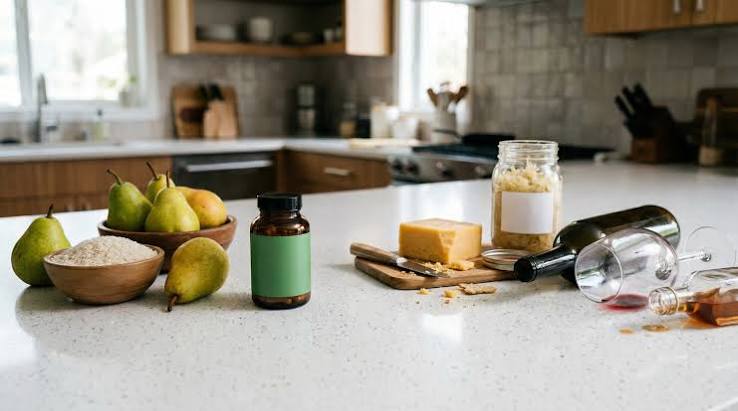
Leftover chicken. A glass of red wine. Some aged cheese. An hour later your face is flushed, your head is pounding, and your sinuses have swollen shut — yet every allergy test came back clean. What you may have instead is a diamine oxidase (DAO) deficiency that leaves your body unable to clear the histamine those foods contain.
Gastroenterologists and allergists increasingly recognise low DAO activity as a genuine biochemical condition, distinct from IgE-mediated food allergy. Years of unexplained symptoms can sometimes trace back to this single enzyme gap. Understanding how DAO deficiency works — and how it differs from other causes of histamine-related symptoms — is the first step toward managing it effectively.
What DAO Actually Does — and Why Its Absence Causes Chaos
Diamine oxidase is the primary enzyme responsible for breaking down histamine in the gut. Produced mainly by cells lining the small intestine, its job is mundane but critical: as histamine enters the digestive tract — whether from food or as a byproduct of gut bacteria — DAO oxidises and inactivates it before it can cross the intestinal wall into systemic circulation.
Enough DAO activity, and the histamine load from a glass of wine or a plate of fermented food is degraded before your body even registers it. Too little, and that degradation fails. The excess accumulates in the gut mucosa, crosses into the bloodstream, and binds to receptors throughout the body — producing a symptom range that mimics allergy but follows a dose-dependent, food-linked pattern rather than the immediate, consistent reactions of IgE allergy. That distinction matters enormously for treatment.
A second enzyme, HNMT (histamine-N-methyltransferase), handles degradation within cells and tissues. Both enzymes together form the body’s clearance system, but DAO is the first line of defence in the gut — where the dietary load hits first. Clinicians discussing enzyme-driven histamine intolerance most commonly focus there, though reduced HNMT activity can also contribute in some individuals.
Why DAO Levels Fall: Genetic, Acquired, and Drug-Related Causes of DAO Deficiency
DAO deficiency can arise from several distinct mechanisms, and the cause shapes the treatment. Knowing which type you’re dealing with — ideally with a clinician’s guidance — matters for choosing the right approach, since a structural genetic deficiency requires a different long-term strategy than a reversible acquired one.
Some people carry genetic variants in the AOC1 gene — which encodes the DAO enzyme — that reduce baseline enzyme activity. Research published in journals including the American Journal of Clinical Nutrition has documented several such variants, though clinical penetrance varies. A genetic deficiency is structural and persistent; dietary management and possibly supplementation become long-term rather than temporary.
Acquired DAO deficiency is at least as common and, honestly, more often reversible. The intestinal cells that produce DAO are vulnerable to gut inflammation — conditions including Crohn’s disease, ulcerative colitis, small intestinal bacterial overgrowth (SIBO), coeliac disease, and leaky gut syndrome all reduce DAO secretion as a secondary consequence. Treating the underlying gut condition may allow enzyme activity to recover in many cases, though outcomes vary and a gastroenterologist should guide that process rather than you assuming resolution on your own. (See also our article on SIBO symptoms and treatment for more on how bacterial overgrowth disrupts intestinal enzyme production.)
Several widely used medications also block or compete with DAO activity — a mechanism well-documented in the clinical literature. The list includes:
-
Non-steroidal anti-inflammatory drugs (NSAIDs), particularly acetylsalicylic acid
-
Certain antidepressants, especially MAO inhibitors and some SSRIs
-
Proton pump inhibitors
-
Metoclopramide and other GI motility agents
-
Some antihypertensives
Because these drug classes are so widely prescribed, medication-induced DAO suppression is a frequently overlooked cause of apparent new-onset histamine intolerance. A patient on long-term NSAID therapy who develops what looks like new histamine sensitivity may be experiencing drug-induced DAO suppression rather than a newly acquired enzyme defect — a distinction worth raising with the prescribing clinician before pursuing more invasive investigations.
Nutritional deficiencies are the third major driver, and they’re often underestimated. Vitamin B6, vitamin C, and copper are all required for DAO synthesis and function; suboptimal status in these micronutrients — particularly B6 — can meaningfully reduce enzyme output even in people with no genetic or structural problem at all.
Recognising the Symptom Pattern: What DAO Deficiency Actually Looks Like
The symptom profile is wide enough to be genuinely confusing. That breadth is part of why it gets missed.
Receptors for histamine (H1 through H4) are distributed throughout the body, so excess circulating histamine doesn’t produce a single localised reaction — it fires at multiple sites simultaneously. Common presentations include:
Cardiovascular and skin: facial flushing, hives, itching, heart palpitations, drop in blood pressure
Head and sinuses: migraine or tension-type headache, nasal congestion, runny nose, watery eyes — symptoms that look exactly like seasonal allergy
Gastrointestinal: bloating, abdominal cramping, diarrhoea, nausea — which can be mistaken for IBS
Neurological: anxiety, dizziness, fatigue, brain fog
Because these distributed receptor sites fire simultaneously, presentations can look entirely unrelated — a migraine one week, palpitations the next. That’s one reason patients accumulate multiple partial diagnoses before anyone considers a unifying mechanism.
The feature that most distinguishes histamine intolerance from other conditions is the dose-and-accumulation pattern. One glass of wine might be tolerable; two trigger symptoms. The same high-histamine meal that’s fine on a calm day becomes intolerable when you’re already inflamed, premenstrual (oestrogen inhibits DAO), or on an NSAID — and that variability is what sends patients down diagnostic rabbit holes for years.
A food diary cuts through a lot of that confusion. Symptoms that correlate with fermented, aged, smoked, or alcohol-containing foods — predictably and in a dose-related way — point squarely toward histamine intolerance as the working hypothesis to bring to a clinician.
Testing for DAO Deficiency: What the Tests Can and Cannot Tell You

Two laboratory routes exist: serum DAO measurement and genetic panel for AOC1 variants.
Serum DAO activity measures the concentration of circulating DAO. Available through specialised laboratories and some integrative medicine clinics, costs typically range from £80–£180 (UK) or $100–$250 (US) depending on the provider. The limitation worth understanding: serum DAO is a proxy for intestinal DAO secretion, not a direct mucosal measurement, and reference ranges vary between labs. A result can land in the “normal” range while the patient’s actual gut output is inadequate relative to their histamine exposure. Treat it as useful corroborating evidence — not a binary answer.
Genetic testing for AOC1 variants identifies structural predisposition. A positive finding confirms a heritable component. A negative finding does not rule out deficiency; it simply means the cause is likely acquired or cofactor-related rather than genetic.
In practice, gastroenterologists increasingly rely on a clinical provocation challenge as the practical diagnostic standard — and to be fair, it’s arguably more useful than either lab test alone. Eliminate high-histamine and histamine-releasing foods for two to four weeks, assess symptom resolution, then reintroduce systematically. Clear improvement on elimination followed by reproducible return of symptoms on reintroduction is strong diagnostic evidence, regardless of what the laboratory shows.
The honest limitation: there is no single gold-standard diagnostic for histamine intolerance, which the European Academy of Allergy and Clinical Immunology (EAACI) has acknowledged in position papers on the topic. The diagnosis remains partly clinical, and any clinician who claims a definitive blood test settles the question is oversimplifying.
Managing DAO Deficiency: Diet, Cofactors, Supplementation, and Cost
Management has three tiers. Working through them in order makes more sense than jumping straight to the most restrictive or most expensive option.
Tier one: reduce the histamine load. A low-histamine diet removes or reduces the highest-burden foods: aged cheeses, fermented foods (sauerkraut, kimchi, kombucha, miso), alcohol — especially red wine and beer — processed and smoked meats, vinegar-containing condiments, certain fish (mackerel, tuna, anchovies), and leftovers. Bacterial activity raises histamine content measurably with time; some proteins roughly double their load within 24 hours even under refrigeration. This is not a forever diet. It’s a diagnostic and relief strategy — symptom remission, then careful reintroduction to find your personal threshold, which varies considerably between individuals. (For a full food list and meal planning guidance, see our low-histamine diet guide.)
Tier two: address cofactor deficiencies. Before reaching for exogenous DAO, it is worth establishing whether your own enzyme production is limited by micronutrient deficiency. Vitamin B6 (pyridoxal-5-phosphate is the active form), vitamin C, and copper are all required for DAO synthesis and function. Addressing genuine deficiency in these — through diet and targeted supplementation, guided by testing — can meaningfully improve the body’s own output. This step tends to get underemphasised relative to the more commercially visible option of taking DAO directly; that’s worth noting. (See our overview of B6 deficiency and enzyme function for more detail.)
Tier three: DAO enzyme supplementation. Exogenous DAO enzyme supplements, typically derived from porcine kidney extract, are available over the counter in many countries at roughly £20–£40/month in the UK or $25–$50/month in the US. Take them before meals containing high-histamine foods. The mechanism is logical: you’re supplying the enzyme your gut is short on, to degrade histamine in the gut lumen before absorption. The clinical evidence base, while growing, remains limited — smaller studies and case series suggest benefit in a subset of patients, but large, well-controlled randomised trials are still sparse as of 2025. For quality assurance guidance, the National Institutes of Health Office of Dietary Supplements offers useful background on evaluating supplement claims, even where histamine-specific data is limited. Products with third-party testing certification (USP, NSF) tend to sit toward the higher end of the price range — well, usually the higher end — but carry more quality assurance.
Supplements work most reliably when DAO deficiency is the primary mechanism. If your histamine intolerance is driven by mast cell activation syndrome (MCAS) — a condition that generates excess histamine from mast cells themselves rather than from an uncleared dietary load — supplementing DAO addresses the wrong problem entirely. The two conditions overlap and can coexist, which is why a diagnosis from a clinician familiar with both is worth seeking before committing to a long-term protocol.
DAO Deficiency vs. Mast Cell Activation and True Food Allergy: The Distinctions That Matter
Getting this differential right changes the entire treatment approach — and ideally it involves input from an allergist or gastroenterologist experienced with all three conditions, since self-diagnosis in this overlap zone carries real risk of pursuing the wrong management strategy. (EAACI guidelines provide a useful reference for how specialists approach this differential.)
DAO deficiency is a clearance problem. Dietary histamine arrives in normal or elevated amounts, and degradation capacity can’t keep up. The fix involves reducing intake and supporting degradation.
Mast cell activation syndrome (MCAS) is a production problem. Mast cells degranulate inappropriately, releasing histamine — and other mediators — in response to triggers that shouldn’t activate them: foods, stress, temperature change, exercise. The histamine load originates inside the body; DAO supplementation doesn’t fully address it. MCAS typically requires a different therapeutic approach including mast cell stabilisers and sometimes low-dose naltrexone, under specialist supervision.
IgE-mediated food allergy is an immune-mediated reaction to a specific protein. Reproducible at any dose above threshold, immediate in onset (typically within minutes), and detectable by specific IgE blood testing or skin prick tests. By contrast, histamine intolerance is dose-dependent, variable with cumulative load, and IgE-negative.
The overlap zone is real. A patient with both MCAS and reduced DAO activity will be more reactive to dietary histamine than either condition alone would predict — the math stops working fast once both mechanisms are active simultaneously. If dietary restriction and DAO support produce only partial improvement, MCAS should be on the differential. An allergist or immunologist experienced in MCAS is the appropriate next step, not more aggressive food elimination. (Our article on MCAS symptoms and diagnosis explains how specialists distinguish it from DAO deficiency.)
Frequently Asked Questions
Can you have histamine intolerance without low DAO levels? Yes. Some people have normal DAO activity but still accumulate excess histamine due to MCAS, reduced HNMT activity, or an unusually high dietary load combined with gut permeability issues. Histamine intolerance describes the clinical syndrome; DAO deficiency is one mechanism among several.
How long does a low-histamine elimination diet need to run before you can assess it? Most clinical protocols use two to four weeks as the minimum. Excess histamine can persist in tissues, and symptom improvement from dietary restriction often takes 10–14 days to become clearly apparent. Judging at five days is premature.
Is DAO deficiency permanent? Only if the cause is genetic. Acquired deficiency from gut inflammation, SIBO, or medication use is often reversible once the underlying cause is addressed. Low DAO driven by nutritional deficiency is also correctable.
Do antihistamine medications help histamine intolerance? They can reduce symptoms — H1 antihistamines in particular block the receptor effects of circulating excess histamine — but they don’t address the cause and aren’t a long-term solution. Some patients find them useful as a bridge while working on root-cause management, but using them to continue eating high-histamine foods without addressing the underlying deficiency is treating the alert, not the problem.
Should you consult a doctor before starting DAO supplements? Yes, particularly if you’re managing any underlying gut condition, taking medications that interact with the histamine pathway, or if symptoms are severe or include cardiovascular presentations like significant palpitations or blood pressure changes. Histamine intolerance management sits at the intersection of gastroenterology, allergy, and sometimes cardiology — a clinician familiar with the condition is worth finding rather than self-treating indefinitely.