Last updated: August 11, 2026
Quick Answer: The low-histamine diet protocol & phases — complete guide usually runs in 2 phases: first, a short reset that lowers symptom noise; then a one-food-at-a-time reintroduction to map your own tolerance pattern. Think histamine may be part of what is going on? Speak with a qualified clinician first.
A low-histamine diet protocol & phases — complete guide is not a fixed menu. It is a short-term, structured approach that lowers histamine load, quiets the food side of symptoms, and then tests foods back in carefully. When histamine seems relevant, I want you to speak with a qualified clinician first, because similar symptoms can come from allergies, GI disease, medication effects, or other conditions that need their own plan. Best results come when the low-histamine diet protocol & phases — complete guide stays temporary and supervised.
Key Facts / Key Takeaways
– The protocol usually has 2 phases: reset, then reintroduction.
– The reset phase should be short-term, not indefinite.
– Reintroduction is where you learn your real triggers, not from a list alone.
– Freshness, storage, ripeness, fermentation, and dose all matter.
– If symptoms include swelling, breathing trouble, fainting, or chest pressure, get urgent medical care.
– A clinician or dietitian can help prevent over-restriction and mislabeling.
I write about food, symptom tracking, and evidence-based nutrition. My job here is pretty simple: help you dodge the usual mistakes — going too broad, staying restricted too long, and guessing at triggers.
Low-Histamine Diet Protocol & Phases: What It Actually Is
The low-histamine diet protocol & phases — complete guide works best as a protocol, not a permanent identity. This difference counts. A protocol has phases: a short reset, a careful reintroduction, and then a maintenance pattern built around your own trigger list. “I can never eat X again” is a trap; it tends to create more confusion than clarity.
The basic idea is straightforward: cut back on foods commonly reported to be high in histamine or histamine-releasing, then watch what changes. You’ll see this approach in patient handouts from allergy and mast cell clinics, dietitian guidance, and review articles on histamine intolerance. The evidence base is imperfect, and responses vary a lot — which is exactly why a phased method beats a one-size-fits-all ban list. For background, see reviews on histamine intolerance in the Journal of the Academy of Nutrition and Dietetics and clinical summaries from major allergy organizations.
Generic advice gets this wrong in two ways. First, it treats the diet like a list of forbidden foods. It isn’t. It is a timed experiment. Second, it assumes “low-histamine” means every item on every chart carries the same risk. It doesn’t. Freshness, storage, ripeness, fermentation, processing, and individual tolerance all matter, and a clinician or registered dietitian can help interpret those differences safely. Wildly different outcomes from the same food? Yes. This happens.
Here is the version I would trust: use the diet only if your clinician thinks histamine could plausibly be involved, keep the restriction phase short enough to learn something, and reintroduce foods one at a time so you can identify your own pattern. Severe symptoms, rapid worsening, or anything involving breathing, swelling, fainting, or chest pressure is not a DIY diet issue.
Phase 1: The Short Reset Phase
Phase 1 is the part of the protocol that should feel strict enough to create a baseline. I would treat it as a short reset, not a lifestyle overhaul; honestly, I’d want professional guidance if symptoms are complex or the diet is already limited. The point is to lower background noise so you can see whether food seems to matter at all.
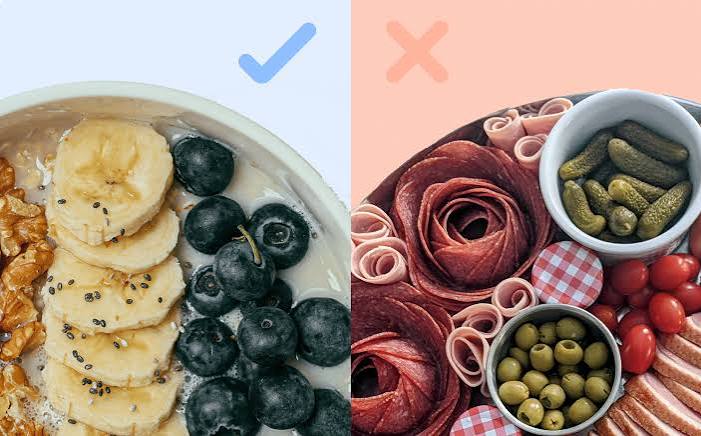
This stage usually centers on foods commonly described in reliable clinical and dietetic sources as higher risk: aged cheeses, fermented foods, cured meats, vinegar-heavy foods, alcohol, long-stored leftovers, and some fish that is not very fresh. Many lists also flag certain produce and condiments, but those lists vary more than people expect. This variability is the clue. No single list fits everyone, and a clinician can help narrow the plan instead of making it broader than necessary.
The upside is practical. Less decision fatigue. Fewer confounders. A cleaner baseline. It also makes meal timing easier to read, which is often more useful than the exact food label.
The downside is just as practical: the phase can balloon. Cut out half the grocery store and you may feel “better” simply because you are eating simpler foods, fewer additives, less alcohol, and less late-night snacking. That does not mean histamine was the only issue. It also means you can accidentally build a low-variety diet that is hard to keep up and hard to interpret.
Usually, the best fit is someone with recurring, non-emergency symptoms that seem to flare after meals and whose clinician has already ruled out obvious urgent causes. It is a poor fit for anyone with a history of eating disorders, anyone already underweight or nutritionally fragile, and anyone who tends to turn every symptom into a food fear spiral. For those readers, the protocol can do real harm by shrinking the diet faster than the evidence can justify. Food fear can spread like spilled ink.
If I were building Phase 1 from scratch, I would keep it brief, simple, and boring on purpose. The more dramatic the reset, the less informative it usually is.
Phase 2: Reintroduction Is Where the Real Answers Start
Phase 2 is the heart of the whole protocol. Skip it, and you do not have a useful low-histamine diet; you have a permanent avoidance list. Reintroduction is where you find out whether a food truly matters for you, whether the issue is dose-related, and whether freshness or preparation changes the reaction.
This phase works because it turns guesses into data. A food that feels impossible during the reset may turn out to be fine in a small amount, or only troublesome when it is fermented, aged, or stored too long. Histamine concerns are not just about the food itself; they also involve how long it sat around, how it was processed, and how your own body handles it. This matters more than people think.
The strength is precision. You stop asking, “Is this whole category bad?” and start asking, “What happens when I test this food in a controlled way?” Much better question.
The weak spot is patience. Good notes are required. Test too many foods too quickly and the signal vanishes. Test after a bad sleep week, a stressful work week, or a stomach bug, and you may blame the wrong item. That is where a lot of people lose the thread.
The exact user profile that fits Phase 2 is someone who tolerated the reset phase well enough to stabilize, can track meals and symptoms without obsessing, and is ready to eat a more varied diet again. It is not a good fit for people who want instant certainty. Reintroduction is slow by design. Slow as molasses, really.
Think of this stage not as “safe versus unsafe,” but as “tolerated, tolerated in small amounts, tolerated only fresh, or not tolerated right now.” That language leaves room for future change, which is realistic for a symptom pattern that may shift over time.
The Honest Side-by-Side
If you want the cleanest version of the decision, this is it: the reset phase is for pattern-finding, and the reintroduction phase is for personalization. One without the other is incomplete.
| Criteria | Phase 1: Short Reset | Phase 2: Reintroduction | Winner for [condition] |
|---|---|---|---|
| Primary purpose | Lower symptom noise and create a baseline | Identify your actual triggers and tolerance thresholds | Depends on your goal: baseline vs personalization |
| Diet strictness | More restrictive by design | Less restrictive, but more structured | Phase 2 for long-term eating; Phase 1 for short-term reset |
| Risk of over-restriction | Higher | Lower, if done one food at a time | Phase 2 |
| Value for identifying triggers | Limited | High | Phase 2 |
| Ease of sticking with it | Moderate to hard | Usually easier | Phase 2 |
| Best for people in a flare | Often yes, with professional guidance | Usually no, until symptoms settle | Phase 1 |
| Best for people who hate tracking | Less ideal, because the baseline can still be noisy | Also difficult, because the testing needs structure | Neither, unless the plan is simplified by a clinician |
| Chance of learning which foods are truly fine | Low | High | Phase 2 |
| Risk of turning into a forever diet | Higher if you never move on | Lower if you complete the process honestly | Phase 2 |
My read on the table is blunt: Phase 1 is a tool, not a destination. Phase 2 is where the protocol earns its keep. If someone says they are “doing low histamine” but never reintroduce foods, they are not actually finishing the process.
The Food List Problem: Why Generic Low-Histamine Charts Mislead People
The biggest problem in this topic is the food chart. People love a chart because it feels definitive. The trouble is that the chart often smuggles in false certainty.
Aged and fermented foods are the easiest part to understand. Many are commonly reported to be higher in histamine. That includes things like aged cheeses, fermented sauces, vinegar-heavy foods, and cured meats. Freshness matters too, especially with fish and leftovers, because histamine can build as food sits. This part of the science is biologically plausible and widely discussed in clinical resources, including Allergy UK and Mayo Clinic-style patient guidance.
What gets muddled is the gray area. Some lists label a long roster of fruits, vegetables, grains, spices, and beverages as off-limits without making clear that individual response varies. That creates a false impression that the diet is universally identical for every person. It is not. Two people can follow the same chart and have completely different symptom patterns.
I would handle this with three buckets:
- Commonly higher risk foods: fermented, aged, cured, or poorly stored items.
- Potentially variable foods: foods that some people tolerate and others do not.
- Usually straightforward fresh basics: simple, minimally processed foods that are easier to judge during the reset phase.
The aim is not to obsess over every item. It is to separate the obvious from the questionable, then use reintroduction to sort out the rest. This keeps the plan useful instead of punitive.
Freshness is where the practical side shows up. Leftovers are not automatically forbidden, but the longer food sits, the less sensible it is to assume it will behave like a freshly cooked meal. So meal prep and storage are part of the protocol, not an afterthought. For example, a meal cooked and chilled promptly on day 1 is usually a different test from the same meal eaten after several days in the fridge.
How to Run the Protocol Without Making Yourself Miserable
Honestly, the best low-histamine plan is the one you can actually finish. This means cutting complexity wherever possible.
Start by choosing a short reset window with a clinician’s input. Do not turn “temporary” into “indefinite.” Then simplify meals instead of building a laboratory diet. A simple plate with a protein, a starch, and a tolerated vegetable is easier to assess than a complicated recipe with six variables and three sauces.
Keep notes, but make them useful. I would track:
– the meal,
– the approximate time eaten,
– symptoms and when they started,
– sleep, stress, illness, alcohol, or medication changes,
– and whether the food was fresh or stored.
That kind of tracking matters because histamine-type symptoms are often messy. If you only write “felt bad,” you learn almost nothing. A 7-day log is often enough to spot a pattern if you also note sleep and stress.
Also, make room for non-food causes. Stress, poor sleep, hormonal changes, infections, and medications can all muddy the water. If symptoms improve during the reset, that does not prove every avoided food was the problem. It only tells you the overall pattern may have a food component.
A generic article often skips the practical downside: this protocol can feel socially annoying and mentally tiring. Eating out gets harder. Grocery shopping takes longer. Anxiety can rise. If you already have a fragile relationship with food, I would not treat this as a casual self-experiment. That is a good time to involve a registered dietitian or physician who understands elimination diets.
Because the goal is information, not punishment, the reset should stay as narrow as possible while still being useful. A short, well-run phase gives you better data than a long, miserable one. This math stops working fast when the diet gets too dramatic.
Our Verdict: Which One to Choose and Why
Choose Phase 1: the short reset if your symptoms are frequent, your clinician thinks histamine could be part of the picture, and you need a clean baseline before testing foods. Choose Phase 2: reintroduction if you already have some stability and want to find your actual trigger foods without staying restricted. Neither if you are using the diet to self-manage severe reactions, have a history of food restriction that can spiral, or have not yet spoken with a qualified professional about what else might be causing the symptoms.
My verdict is simple: the short reset wins first, but only as a bridge to reintroduction. The protocol is useful only when it ends with a more normal, personalized diet.
If you want the most honest recommendation I can give, it is this: do not judge low-histamine eating by the first restrictive week. Judge it by whether it helps you identify a narrower, sustainable pattern afterward. That is the real measure of success.
Exception Scenarios: When the Verdict Flips
There are a few cases where the usual recommendation changes.
-
You are already eating very little.
If your diet is already narrow, a low-histamine reset may be the wrong next step. The risk of nutritional fallout and food fear is too high. I would want professional guidance before any further restriction. -
Your symptoms are severe or involve emergency signs.
When swelling, trouble breathing, fainting, or chest pressure show up, the conversation is no longer about diet phases. That needs urgent medical attention. -
You cannot track food and symptoms at all.
If a diary makes you more anxious or less functional, a rigid protocol may not help. A clinician might suggest a simpler approach or a different diagnostic path. -
A clear non-food trigger is already obvious.
If medication timing, a confirmed allergy, a GI diagnosis, or another cause explains the pattern better, low-histamine eating should not be your first lever.
These exceptions matter because a good protocol should reduce confusion, not create it.
What a Generic Low-Histamine Guide Leaves Out
Most generic guides leave out two truths.
First, histamine is not the same thing as “bad food.” Some foods are more likely to be troublesome because of fermentation, aging, or storage, but tolerance is individual. A rigid blacklist can make a person afraid of food they may actually tolerate.
Second, the diet can fail for reasons that have nothing to do with histamine. If symptoms are driven mainly by sleep loss, stress, a GI disorder, a medication effect, or another allergy issue, the food list may become an expensive distraction. That is why I keep pushing the same idea: speak to a qualified professional about your own situation before you start and again if the plan is not making sense.
I also think many articles underplay the psychological burden. Food restriction can make daily life smaller. That matters. A protocol is only worth using if it gives you usable information and a better long-term eating pattern.
FAQ
How long does the low-histamine reset phase last?
There is no one universal timeline I can responsibly give. In practice, it is usually treated as short-term and paired with a clinician-guided plan so it does not become an indefinite restriction.
Can I just follow a low-histamine food list and stop there?
You can, but I do not recommend that as the end point. Without reintroduction, you usually learn very little about your actual tolerance.
Are leftovers always off-limits?
No. But storage time matters, and older food is generally more likely to be a problem than freshly cooked food. That is one reason meal timing and prep matter in this protocol.
Is a low-histamine diet the same thing as a low-allergy diet?
No. They are different ideas. A low-histamine protocol is about reducing foods that may increase histamine load or act as histamine triggers, while allergy management is a separate medical issue.
Who should guide this process?
A qualified clinician, ideally one familiar with food-related symptom patterns, and often a registered dietitian if the diet needs to be more than a short experiment.