High-Histamine Foods: Why Aged, Fermented, and Leftover Foods Top the List

Last updated: August 11, 2026
By Dana Reyes, food science writer and nutrition researcher
Quick Answer: High-histamine foods typically contain 20–200+ mg/kg of histamine, compared to <1 mg/kg in fresh foods. The highest levels appear in aged cheeses (up to 2,500 mg/kg), fermented fish products (up to 2,000 mg/kg), and improperly stored leftovers (histamine doubling every 6–12 hours at refrigerator temperature).
Key Facts
- Histamine forms when bacteria convert the amino acid histidine in protein-rich foods — a process accelerated by time, warmth, and microbial activity.
- Fresh foods start low in histamine but accumulate it during aging, fermentation, or even refrigerated storage.
- The enzyme diamine oxidase (DAO) breaks down dietary histamine in the gut; reduced DAO activity leads to histamine intolerance symptoms.
- Alcohol inhibits DAO function for several hours, reducing your ability to clear histamine from other foods.
- A structured 4–6 week elimination diet, ideally supervised by a dietitian, is the standard approach to identifying histamine triggers.
Same pasta, two nights apart. The first night, nothing. The second night — a pounding headache, flushed skin, a nose that won’t quit. Histamine intolerance may be the culprit. What makes it so disorienting is that the foods most likely to trigger symptoms are often the ones that seem healthiest: fermented vegetables, aged cheeses, red wine, bone broth simmered for hours. Understanding why these high-histamine foods accumulate the compound explains why cutting them feels so counterintuitive from the outside.
This piece is for the reader who already suspects histamine is their problem — or who has been told to try an elimination diet and wants the science, not just a list. A list alone won’t help you make judgment calls at a restaurant or understand why yesterday’s chicken is a different food from today’s.
Why Aged, Fermented, and Leftover Foods Are High in Histamine
Histamine is a biogenic amine — a compound formed when bacteria decarboxylate the amino acid histidine. Almost every protein-containing food has histidine in it. The question is whether the conditions for bacterial activity have been present long enough to convert a meaningful amount of it.
Three conditions drive that conversion: time, temperature, and microbial load. Aged foods hit all three. A wheel of Parmigiano-Reggiano aged for 24 months has had bacteria working on its proteins for two years. Kimchi fermented at room temperature for a week has had the same process happening in compressed time. Leftover fish left at room temperature for four hours is essentially undergoing rapid, uncontrolled fermentation.
So these categories cluster together — not because these foods are inherently bad, but because they all share extended bacterial exposure to protein. The same process that gives aged Gouda its sharpness and sourdough its tang is producing histamine as a metabolic byproduct.
One thing generic articles consistently get wrong: they treat histamine content as a fixed property of a food. It isn’t. The level in a piece of fish depends on how it was caught, chilled, processed, and stored — not just on the species. A fresh, flash-frozen piece of tuna can be relatively low; a piece left on a boat’s deck for six hours before icing will be dramatically higher. The food itself isn’t the variable. The handling is.
The Main High-Histamine Food Categories — and Why Each One Qualifies
Aged and fermented dairy. Hard cheeses accumulate histamine during ripening because the starter cultures and environmental bacteria that drive aging are exactly the bacteria that produce it. The longer the aging, the higher the load — this is a spectrum. Fresh mozzarella and ricotta sit at one end; Parmigiano, aged cheddar, and Gruyère at the other. Processed cheese is its own category: the manufacturing process disrupts bacterial activity, but it often contains additives that block the DAO enzyme (more on that below), which can produce similar symptoms through a different mechanism.
Fermented vegetables and condiments. Sauerkraut, kimchi, and pickles are fermentation products by definition. The bacteria responsible for lactic acid fermentation — which makes these foods shelf-stable and, in many cases, probiotic-rich — also produce histamine. Genuinely frustrating. Many people have heard that fermented foods support gut health, and for most people, they do. But for someone with poor histamine clearance, they’re a reliable trigger. Both things are true at once.
Fermented condiments follow the same pattern — soy sauce, fish sauce, Worcestershire, miso, vinegar. Each concentrates histamine alongside other biogenic amines like tyramine and putrescine. A tablespoon of soy sauce in a stir-fry adds little volume; the histamine concentration in that tablespoon, though, is considerable.
Alcohol, especially wine and beer. Alcohol is a high-histamine substance in two distinct ways. Red wine contains histamine directly — white wine somewhat less, though still significant. And alcohol inhibits diamine oxidase (DAO), the enzyme in your gut lining that breaks down dietary histamine before it reaches systemic circulation. Even a relatively low-histamine meal becomes riskier when wine is added, because your clearance mechanism is impaired for several hours afterward. Wine is often the straw that breaks the camel’s back for sensitive individuals; it’s not just what it adds, it’s what it takes away.
Beer — particularly craft ales and homebrew — is also high in histamine from fermentation. Spirits run generally lower, though not zero, and mixers containing vinegar-based ingredients (Worcestershire in a Bloody Mary, for instance) reintroduce the problem.
Cured meats and processed fish. These preserved proteins carry high histamine levels due to extended bacterial activity during processing. Before eating them regularly, consult a healthcare provider if you suspect sensitivity; individual tolerance varies widely. Research published in the Journal of Food Protection (2015) found that cured sausages can contain 20–200 mg/kg histamine, while improperly handled fish may exceed 500 mg/kg. Smoked, canned, and dried fish — anchovies, sardines, smoked salmon, canned tuna — accumulate histamine through both the preservation process and the bacterial degradation that begins immediately after catch. Canned fish deserves a specific note: quality varies enormously depending on how quickly fish was processed post-catch, and there’s no reliable way to assess that from a label.
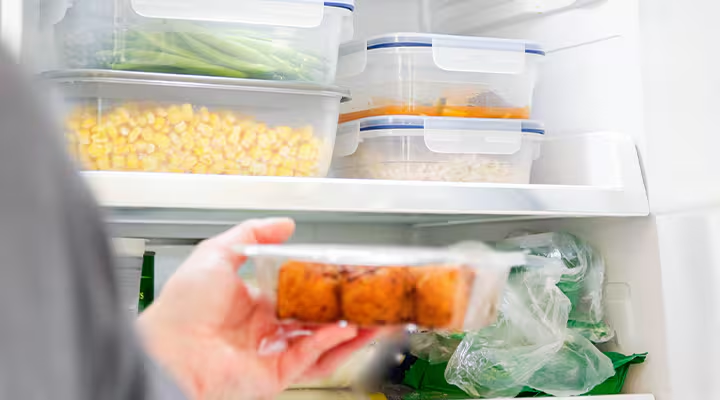
Leftovers. This is the category people most often miss, because it doesn’t fit a cultural frame of “processed” or “fermented” food. Bacteria, though, don’t observe our labeling conventions. A home-cooked chicken breast is low in histamine straight from the oven. After 48 hours in the refrigerator — where bacterial activity continues even at low temperatures — levels have risen. After 72 hours, that rise may be clinically meaningful. The problem compounds if the food was cooled slowly, transferred in and out of the fridge, or only partially reheated.
For a histamine-sensitive person, “fresh” is not a preference. It’s a clinical variable.
The DAO Enzyme: Why Two People Can Eat the Same Meal With Different Results
Histamine intolerance is not an allergy. True allergic reactions to histamine are vanishingly rare. What most sensitive people have is a problem with clearing dietary histamine, not with the compound itself.
Diamine oxidase (DAO) breaks down histamine in the gut epithelium before it’s absorbed. People with reduced DAO activity — whether from genetics, gut inflammation, alcohol, certain medications, or nutritional deficiencies (notably vitamin B6 and copper, both required as cofactors) — absorb more histamine from the same meal than someone with healthy enzyme function. The enzyme gap, not the food itself, is often the real story.
This explains several patterns that confuse people:
- Why the same food triggers symptoms one day and not another (alcohol use, medications, and gut inflammation all affect DAO activity acutely)
- Why pregnancy sometimes temporarily resolves histamine intolerance (the placenta produces DAO in large quantities)
- Why reactions often worsen with age or after a course of antibiotics (gut changes affecting DAO-producing cells)
- Why a single glass of wine with an aged cheese triggers a headache, when either alone might be tolerable (the combined histamine load exceeds the clearance threshold)
For an authoritative overview of histamine metabolism and DAO function, the European Food Safety Authority has published assessments of biogenic amines in food that are publicly available through their website. The American Academy of Allergy, Asthma and Immunology also maintains accessible patient resources on histamine intolerance that are worth bookmarking.
Foods That Are High-Histamine Specifically Because of How They’re Made
Some foods appear on histamine lists and confuse people because they don’t seem fermented. Spinach and tomatoes are the classic examples. These contain histamine directly — tomatoes rank among the most significant non-fermented sources — but they also contain histamine liberators: compounds that trigger the release of the body’s own stored histamine rather than delivering dietary histamine. Strawberries, citrus, and chocolate operate through this mechanism rather than through direct histamine content.
The practical implication is worth spelling out: a reaction to tomato-based foods doesn’t necessarily mean high dietary histamine intake. It may mean tomatoes are releasing histamine from mast cells in the gut. That distinction matters because DAO supplementation, which helps with dietary histamine, may not help with liberators. If your elimination trial is inconsistently effective, this is one mechanism worth discussing with a clinician.
Avocados get listed as high-histamine frequently, but the picture is murkier. They contain other biogenic amines and may act as liberators, but their histamine content specifically is debated in the literature. Many sensitive individuals react to them anyway — and honestly, that individual experience often matters more than the mechanistic debate. As with most of this topic, careful elimination work tells you more than any theoretical classification.
What Histamine Avoidance Costs and What Affects the Price
The practical challenge here is that this eating pattern conflicts directly with most standard dietary advice. Fermented foods for gut health. Aged cheeses as a calcium source. Slow-cooked bone broth. Long-marinated proteins. Leftovers to reduce waste. All of these habits increase histamine load.
A low-histamine approach requires:
Buying and cooking fresh. The window between purchase and consumption matters. Meat and fish bought from a high-turnover source — and eaten within a day or two — will carry lower histamine than the same items sitting longer. That can be challenging for anyone with limited time or infrequent access to shopping.
Freezing strategically. Freezing stops bacterial activity cold — literally. A portion of cooked meat frozen immediately after cooking and reheated directly from frozen carries far less histamine than the same portion refrigerated for three days. For most people, this is a more workable solution than cooking daily from scratch.
Rethinking “healthy” fermented foods. During an elimination phase, fermented foods come out — yogurt, kefir, sourdough, kombucha, apple cider vinegar included. Temporary, yes. But it requires rethinking many dietary habits at once, which is genuinely disruptive.
Reading labels differently. Vinegar is a fermentation product and appears in an enormous range of condiments, dressings, and marinades. Soy sauce and yeast extract are concentrated sources. “Natural flavors” in processed foods sometimes includes fermented ingredients. This level of scrutiny is burdensome — and it’s worth stating plainly that maintaining this eating pattern long-term demands strong motivation.
The financial impact varies. Fresh fish and daily shopping push costs up, but skipping restaurant meals and cutting wine, aged cheeses, and specialty fermented products can offset some of that. Overall, expect food costs to rise 15–30% during a strict elimination phase, primarily because of shorter storage windows and increased waste.
Alternatives to Strict Elimination — and How They Compare
A full elimination protocol isn’t the only option. The main alternatives:
DAO enzyme supplements. These over-the-counter capsules, taken before meals, aim to boost histamine breakdown in the gut. Evidence is limited but growing; a 2019 study in Allergologie found modest symptom improvement in 76% of participants using DAO supplements. They work best for occasional exposure — well, usually better for occasional exposure — rather than as a permanent substitute for dietary changes.
Antihistamine medications. H1 blockers (like cetirizine) and H2 blockers (like famotidine) can blunt symptoms but don’t address the underlying cause. Useful for flare management; less effective against chronic dietary load.
Partial restriction. Some people identify their top 3–5 triggers through trial and error and eliminate only those, rather than following a comprehensive list. Less restrictive, but it may leave symptoms partially unresolved.
Gut health interventions. Addressing underlying gut inflammation, SIBO, or dysbiosis through targeted treatment may restore DAO function over time, reducing the need for permanent avoidance. Requires professional guidance and takes months to show results.
Each approach involves tradeoffs. Supplements and medications offer convenience but incomplete relief; partial restriction is more livable but less diagnostic; full elimination gives the clearest data but is the hardest to sustain.
Who Should Not Self-Manage a Suspected Histamine Problem
Histamine intolerance overlaps symptomatically with several conditions: mast cell activation syndrome (MCAS), IgE-mediated food allergies, irritable bowel syndrome, and small intestinal bacterial overgrowth (SIBO). A genuine anaphylactic reaction to food should never be self-attributed to histamine intolerance — that requires clinical evaluation to rule out true allergy.
Pursuing an elimination protocol is a reasonable starting point for investigating food-triggered headaches, flushing, gastrointestinal symptoms, and itching when other causes have been ruled out. But it’s most useful as a structured, time-limited trial — typically four to six weeks — rather than indefinite restriction. Extended avoidance of fermented and aged foods without medical supervision can create dietary gaps and make social eating progressively harder to manage. A dietitian experienced in elimination work is the right professional for this kind of trial.
FAQ
Does cooking destroy histamine in food?
No. Histamine is heat-stable. Cooking a food that already contains high histamine does not significantly reduce its content. Cooking does kill bacteria, which stops further production, but it does not reverse what has already accumulated. This is why fresh handling before cooking matters more than cooking temperature.