How Long Can Low-Histamine Leftovers Stay in the Fridge?

Last updated: November 05, 2026
Key Takeaways
- Eat low-histamine leftovers within a day when possible; 48 hours is a cautious outer limit for many people.
- Cool cooked food fast and refrigerate it within about 2 hours, sooner for large or dense batches.
- Shallow, well-labeled containers help more than fancy ones by cooling food quickly and keeping it organized.
- Reheat leftovers once, only in the portion you will eat, and avoid repeated warm-cold cycling.
Low-histamine leftovers can usually stay in the refrigerator for about 1 to 2 days, and for this topic the shorter end is the safer choice. If you are trying to keep histamine load down, the clock starts as soon as the food stops steaming, not when you remember it later. For general food-safety context, see the USDA FoodKeeper app and the Food Standards Agency guidance on leftovers; for symptom-specific choices, consult a professional if you have a diagnosed intolerance or complex symptoms.
That answer is blunt because How Long Can Low-Histamine Leftovers Be Kept in the Fridge? is where low-histamine eating often breaks down. A dish can look fine and still be a poor bet for someone sensitive to histamine, especially if it sat warm too long, cooled slowly, or was reheated more than once. The goal is not to stretch storage to the limit. The goal is to use the fridge as a short pause, then eat or discard. If you are unsure how strict to be, consult a clinician or dietitian familiar with histamine intolerance.
If you want the larger framework for low-histamine cooking, storage, and handling, the hub on that topic is the right place to start. This page stays narrow: how long leftovers can sit in the refrigerator, what to do right after cooking, and when to throw them out.
How long leftovers can stay in the fridge
How Long Can Low-Histamine Leftovers Be Kept in the Fridge? is usually answered with a 24-hour target, and I would treat 48 hours as the outer edge for many people. That is the practical rule for cooked food kept in a refrigerator at about 4°C / 40°F or colder.
The reason is simple: histamine can rise while food sits, even when the refrigerator slows spoilage. A cold fridge does not reset the clock, and it does not make food “safe again” after a long delay. A dish that is still technically edible can still be a bad choice for someone avoiding histamine buildup.
A few examples make the timing more concrete:
- Cooked chicken or turkey: aim for the next day.
- Cooked vegetables: next day is still the cleanest target.
- Soups and stews: keep the same 1- to 2-day window, but cool them fast.
- Cooked rice: keep it on the shortest timeline possible, because it is one of the foods people are often told to cool and store with extra care.
This is also where low-histamine leftovers differ from general leftover advice. A standard food-safety guide may allow a longer refrigerator window for some cooked foods, but histamine tolerance is not a standard food-safety problem. Someone with histamine intolerance may react to food that never looked or smelled spoiled.
Therefore, the safest practical position is to cook what you can finish, or plan to eat leftovers the very next day. That is the rule I would use if the point is symptom control rather than convenience.
Get leftovers into the refrigerator fast
Leftovers should be cooled and refrigerated within about 2 hours of cooking, and sooner is better when the batch is large or dense. The point is to move the food out of the warm zone before bacteria and histamine have time to climb.
Here is the simplest workflow.
- Divide the food into shallow portions right away. A 2-inch layer cools faster than one deep container, so transfer a big pot into smaller containers instead of leaving it in the pan.
- Leave the lid off for a short time if steam is trapping heat. You want the food to stop actively steaming, not sit uncovered for hours.
- Put the containers in the refrigerator as soon as the food is no longer dangerously hot. The fridge should be at about 4°C / 40°F or below.
- Move the oldest leftovers to the front shelf so they get used first. This keeps a 1-day target from turning into a forgotten 3-day container at the back.
- Date the container if your memory is unreliable. Even a simple “Mon lunch” note helps when you are trying to stay inside a 24-hour window.
For example, cooked rice is the classic example: it should not sit warm on the counter for long, because the combination of moisture and starch creates an easy mistake. The same goes for thick soups, braises, and casseroles, which hold heat in the center long after the top feels cool.
One common error is to refrigerate a huge stockpot whole and assume the fridge will “take care of it.” It will not cool the center quickly enough. The cost is a longer warm period, which is the opposite of what a low-histamine plan needs. Split the food up instead.
What container choice does for histamine control
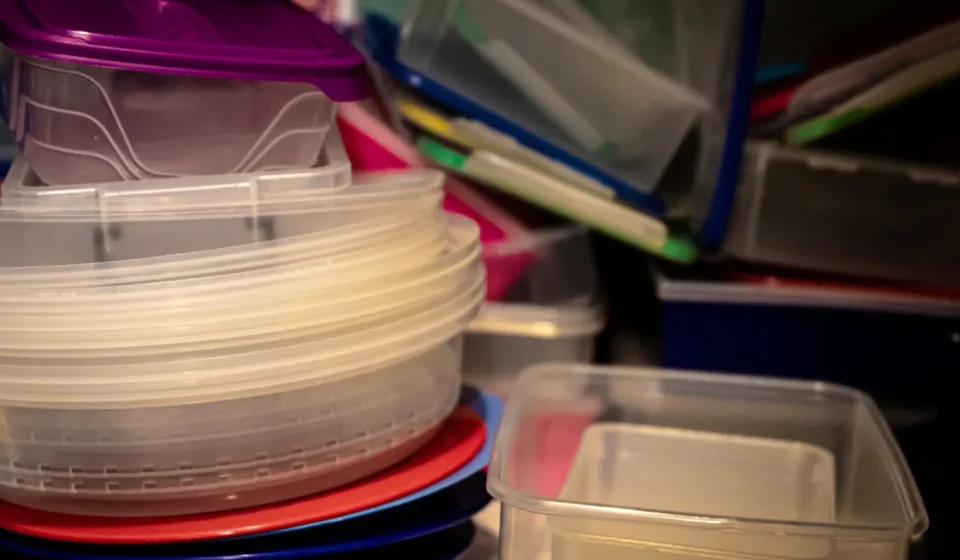
A tight, shallow container helps more than a fancy one, and the best container is the one that cools food quickly and keeps it labeled. Glass or food-grade plastic both work if they are clean, shallow, and easy to stack.
Container choice matters for two reasons. First, shallow containers let heat escape faster. Second, a container with a reliable lid reduces fridge odors, spills, and the temptation to keep opening the food and checking it. A good lid does not make leftovers last longer, but it helps them stay organized enough to use on time.
A few practical features are worth looking for:
- Depth of about 1 to 2 inches for faster cooling
- Clear sides so you can see what is inside
- A lid that seals without crushing soft food
- A size that matches a single meal instead of a family tray
Avoid stuffing a full meal into one deep container if you want the food cold quickly. A 1-quart container with a wide surface area usually beats a tall, narrow one for leftovers you plan to eat within 24 hours.
This is also where people sometimes make a low-histamine mistake that has nothing to do with the recipe. They store one serving next to a container that has been sitting in the fridge for 3 days, or they mix fresh food with older food in the same dish. That makes timing harder to track. Keep each batch separate so the fridge does not become a guessing game.
If you are sensitive enough that tiny timing differences matter, simple containers beat “smart” storage habits every time. There is no useful benefit in saving the same food in three different jars if none of them are labeled.
Reheating leftovers without stretching the clock
Reheat leftovers once, heat only the portion you will eat, and do not cycle the same food through warm and cold more than necessary. For a low-histamine diet, repeated reheating is usually a worse idea than a single careful reheat.
The reason is not only food safety. Every extra warm-up gives the food another opportunity to sit in a temperature range that is bad for both spoilage control and histamine management. The cleanest pattern is: cook, cool, refrigerate, reheat once, eat.
Use these rules:
- Reheat to piping hot throughout, not just warm at the edges.
- Only take out the portion you need for that meal.
- Do not return reheated food to the refrigerator.
- If a dish has already been reheated once, consult a professional if you are unsure whether to eat it again.
Microwaves are fine if they heat evenly enough, but stir soups or rice midway so cold pockets do not linger. On the stove, a small saucepan is usually better than a big pot because you can heat a single serving quickly. The exact method matters less than the result: the food should be hot all the way through in one pass.
A frequent mistake is reheating the whole container at lunch, eating half, and saving the rest for dinner. That second round of warming and cooling is the kind of habit that quietly defeats a low-histamine plan. If you need two meals, split the leftovers before reheating.
Which leftovers go bad first
Wet, mixed, and protein-heavy leftovers usually need the most caution, while simple cooked vegetables are a little easier to manage for a day or so. That does not make any leftover “safe” for long; it only tells you which ones deserve the shortest leash.
The foods I would watch most closely are:
- Cooked rice
- Chicken, turkey, fish, and other cooked proteins
- Soups, stews, and casseroles
- Sauces and gravies
- Mixed meals with several ingredients held together by moisture
These foods tend to sit in the fridge and still look normal after 24 hours, which is exactly why they can fool you. Odor and appearance are poor guides for histamine tolerance. A dish can smell fine and still be a bad fit for someone who reacts to leftovers.
Dryer foods do a little better in the fridge, but “better” is not “long.” Even plain cooked vegetables are best used quickly. A low-histamine fridge strategy is about shortening storage, not finding loopholes.
The trade-off here is convenience. If a household likes to batch-cook and eat the same meal for several days, that pattern works poorly for a strict low-histamine approach. This is one of the few places where the diet can clash with normal meal planning. If symptoms matter, the menu has to bend toward shorter storage, even if that means cooking smaller amounts.
When to throw leftovers out instead of saving them
Throw leftovers out if they were left out too long, if you cannot tell how long they have been in the fridge, or if they are older than 2 days and you are sensitive to histamine. That is the simplest discard rule that still respects the reality of this diet.
Use this as a final check:
- Room temperature for more than about 2 hours: discard
- Unknown fridge time: discard
- More than 48 hours in the refrigerator: discard for a low-histamine plan
- Off smell, slimy texture, visible mold, or a damaged container: discard
- Reheated more than once: do not keep saving it
The hard part is that some leftovers will look harmless right up until they are not useful anymore. That is why this page leans conservative. A low-histamine diet is not the place to “use your judgment” in the same way you might with a normal leftovers habit. The whole point is to reduce uncertainty.
I would also be cautious with food that has been in and out of the fridge multiple times during serving. Each extra warm period gives the food another chance to drift outside the target window. If a dish has been on the table during a long meal, treat the timing as shortened, not unchanged.
The blunt answer is that leftovers are cheap to replace and symptoms are not. If a container makes you pause and do math, it is probably already too old for this diet.
The practical rule I would use every week
Use leftovers within 24 hours, keep them refrigerated at 4°C / 40°F or below, and do not keep them longer than 2 days. That rule is strict enough for most low-histamine needs without becoming impossible to follow.
The sequence is straightforward:
- Cool food fast.
- Store it in shallow containers.
- Label it or place it where you will see it.
- Reheat only once.
- Discard anything that is old, uncertain, or repeatedly warmed.
This is a narrow rule for a narrow purpose. It is not the same as a general food-safety page, and it is not a meal-prep system. It is a short-horizon storage rule for people who are trying to keep histamine low without turning every meal into a science project.
For the broader handling framework, the hub on low-histamine cooking, storage, and food handling is the best next stop. For related refrigerator guidance, see how to cool cooked food safely, safe fridge temperatures, and when to discard leftovers.
How long are leftovers safe on a low histamine diet?
Leftovers are usually safest when eaten within 24 hours, and 48 hours is the outer edge I would use for a low-histamine plan. That shorter window matters because histamine can rise during storage even when food still looks fine. If you are sensitive, treat “safe” as “safe for your symptoms,” not just “not spoiled.”
Should you freeze leftovers right away?
Freezing is a separate storage method and is not covered on this page. If you are deciding whether to freeze, use a source that focuses on freezing rules for food safety, because the timing and handling are different from refrigerator storage. For low-histamine needs, the key question is still how quickly the food leaves the warm zone and how soon it is eaten.
How do you store leftovers for histamine intolerance?
Store them in shallow, covered containers, cool them quickly, and put them in a refrigerator at about 4°C / 40°F or below. Keep the storage time short, label the container, and reheat only the portion you plan to eat. If the timing is unclear or the food is older than 2 days, discard it rather than guessing. For additional food-safety guidance, consult the USDA FoodKeeper app or the Food Standards Agency, and talk with a professional if your symptoms are severe or unpredictable.
Drafted with AI; not yet reviewed by a person.